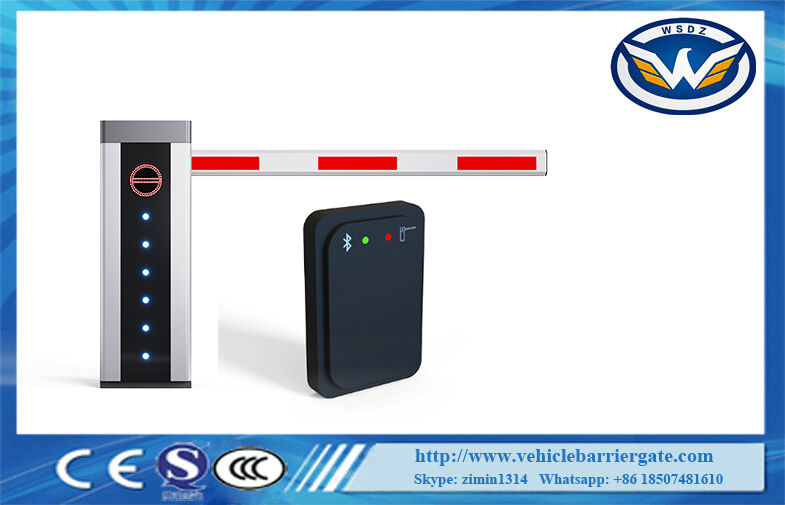
Addressing False Barrier Activation in Rain and Fog with Millimeter Wave Radar
H2: Why Rain and Fog Increase False Triggering
In outdoor parking lots, facility entrances, and underground garages, environmental conditions such as rain and fog can significantly affect the performance of barrier gate detection systems. Common issues include:
- Barriers opening without vehicle presence
- Failure to close after vehicles pass
- Frequent triggering due to unstable signals
These problems reduce operational efficiency and may introduce safety risks, especially in high-traffic or unmanned environments.
H2: Limitations of Conventional Detection Technologies
H3: Optical and Infrared Sensitivity
Infrared and camera-based systems rely on light signals, which are easily disrupted by rain, fog, and lighting variations.
H3: Loop Detector Constraints
Loop detectors depend on metal detection and may struggle with non-standard vehicles or pedestrian detection.
H3: Signal Instability
Moisture and temperature fluctuations can degrade sensor performance, leading to unreliable operation.
H2: Advantages of Millimeter Wave Radar
H3: Stable Detection with 79GHz Technology
Millimeter wave radar operates independently of visible light and maintains consistent performance in rain, fog, snow, and dust conditions.
H3: High Precision Reduces Errors
With approximately ≤2 cm accuracy and 4 cm resolution, radar systems can distinguish between vehicles, pedestrians, and environmental interference more effectively.
H3: All-Weather Operation Capability
With a working temperature range of -40°C to +85°C and IP67 protection rating, radar sensors are designed for harsh outdoor environments.
H2: Optimizing Detection Zones and Sensitivity
Configurable detection zones and sensitivity settings are critical for minimizing false triggers:
- Forward detection range can be adjusted (around 3 meters or as required)
- Lateral coverage can be limited to lane width (e.g., ±0.5m to ±1.5m)
- Sensitivity levels can prioritize vehicle detection or include pedestrians
Proper configuration helps eliminate interference from adjacent lanes or irrelevant objects.
H2: The Role of System Integration
Radar sensors function as part of a broader barrier control system. Their effectiveness depends on integration:
- Relay outputs enable anti-collision logic
- RS485 communication supports system integration
- Bluetooth and software tools allow remote configuration and updates
This ensures consistent performance and easier maintenance.
H2: Selection Guide for Rain and Fog Environments
When selecting a detection solution, consider:
- Use of millimeter wave radar instead of optical sensors
- Detection accuracy and resolution
- Protection rating (IP67 recommended)
- Operating temperature range
- Adjustable detection zones and sensitivity
These factors are essential for maintaining stable and reliable barrier operation under adverse weather conditions.


 Your message must be between 20-3,000 characters!